



Tendinopathy Part 1
Tendinopathies are very common, especially in the older person who has been active for their whole life or in a younger person who has suddenly increased their amount of activity. They can be a long term and very irritating condition to have that can hinder not only activity in sports but activities of daily living.
A tendon is the connecting tissue between a muscle and a bone and are found all over the body. They can be short and thick like the Patella tendon or longer and thinner like the Achilles tendon. Their function is the absorption of force through stretch imposed by the muscle or ground reaction force and the production of movement at the joint they act on through elastic recoil.
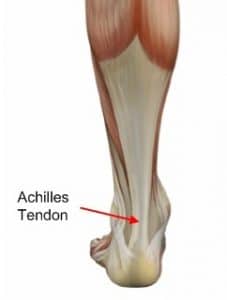
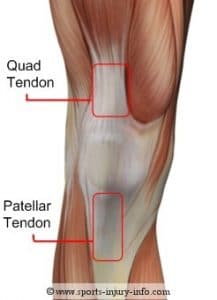
Tendons are made up of a combination of different structures which each play an important role in its health and strength; Collagen gives the tendon its tensile strength, Ground Substance which resists compressive forces and Cells which respond to load and helps recover and repair the tendon after loading.
When a tendon is put under load e.g. Running, it responds by breaking down very slowly but with adequate recovery it recovers and strengthens. If the tendon is not loaded sufficient it will gradually get weaker however if the tendon is overloaded excessively without adequate recovery it will gradually break down which causes a tendinopathy if not picked up and treated in time.
Overload of the tendon can be caused in numerous ways. For example:
- If the tendon is acting on a joint that is unstable from a previous injury it will have to work harder because it is not acting on a solid base.
- If the tendon is acting on an excessively stiff joint, the tendon must absorb more force than it is used to due to the reduction in its load absorption capability.
- If the tendon is being compressed, for example when it wraps around a bone on movement or is compressed chronically by a garment of clothing it will progressively breakdown because of its lack of resistance to compressive forces.
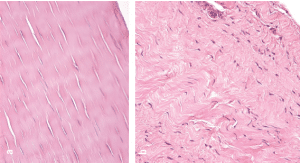
The tendons respond to overload by increasing the activity of the cells that produce ground substance and slowing the cells that produce collagen therefore increasing the gaps between and breaking down of the collagen fibres. There is then an influx of new blood vessels, also known as Neovessels, as the tendon attempts to heal which causes an inflammatory response and pain. If the initial inflammatory response is not treated by unloading the tendon the response will continue to the deposit of adipose tissue and result in malalignment of the collagen fibres causing increased weakness of the tendons in response to load, therefore increasing the risk of tendon rupture. As can be seen below.
Tendinopathies are generally diagnosed through a thorough history, mechanism of injury and assessment taken by the clinician. The diagnosis can be confirmed with ultrasound scan showing the increase in thickness of the tendon and malalignment and separation of the collagen fibres. A Doppler Ultrasound can pick up the presence of neovessels and help identify at which stage the tendinopathy is.
Sorry, the comment form is closed at this time.